The Story
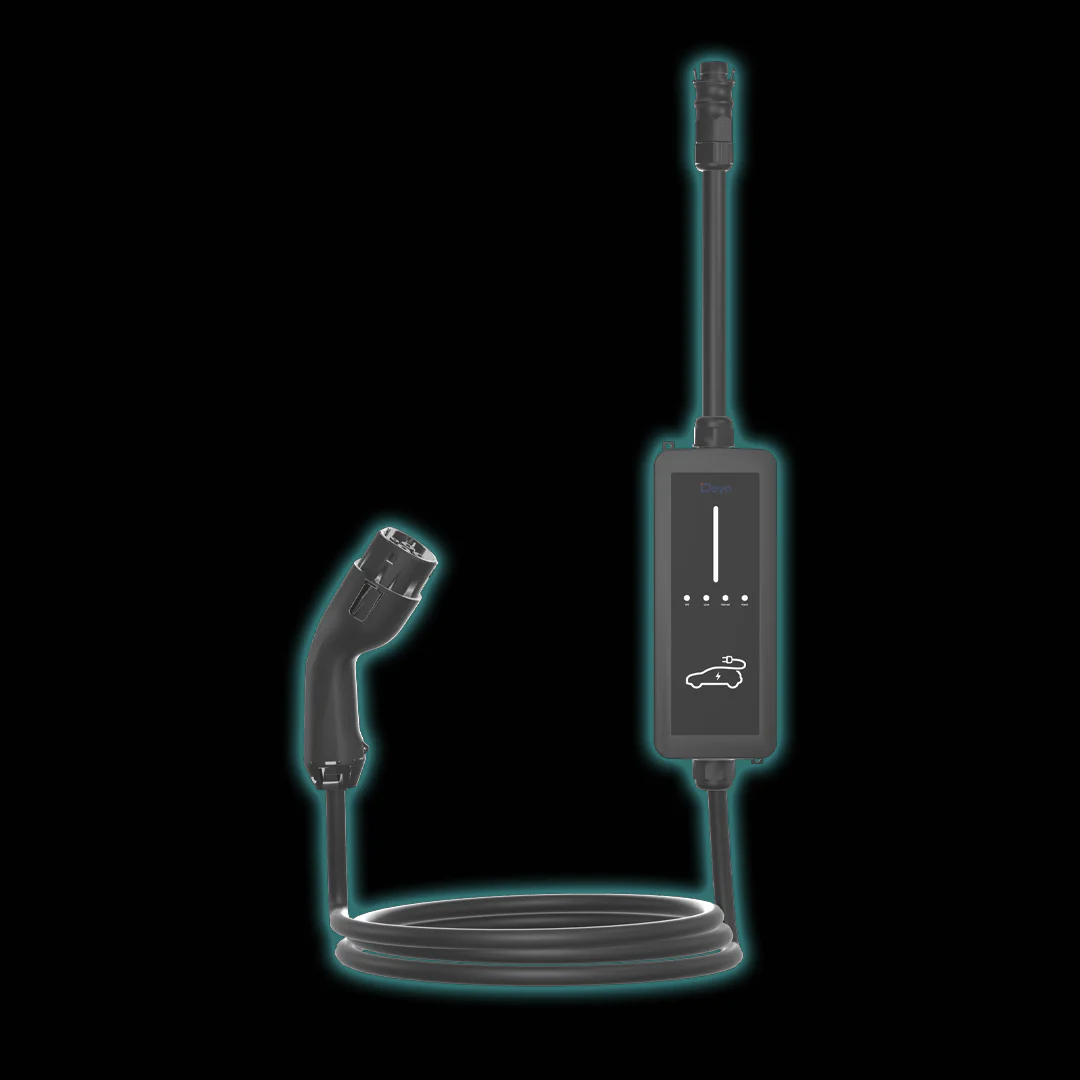
The DEYE EV Charger is a high‑performance AC electric vehicle charging station designed for seamless integration with Deye hybrid inverter systems. Engineered with LoRa, Wi‑Fi, and Bluetooth communication options, it enables smart, automated, and energy‑efficient EV charging that maximizes solar power usage and minimizes grid dependency.
Built for both residential and commercial applications, the DEYE EV Charger provides fast, reliable, and safe charging with advanced protection features and flexible operating modes.
Key Features
-
Solar‑Optimized EV Charging
When connected to a Deye hybrid inverter, the charger can operate in Solar‑Only Mode, Time‑Based Mode, or Plug‑and‑Charge Mode, ensuring maximum use of available solar energy. -
Flexible Single‑Phase and Three‑Phase Options
Available in 7 kW, 11 kW, and 22 kW configurations to suit different EV charging requirements and electrical setups. -
Multiple Communication Methods
Supports LoRa, Wi‑Fi, and BLE for stable, long‑range and intelligent communication with Deye inverters and apps. -
Advanced Protection Systems
Includes over‑temperature, overload, over‑voltage, under‑voltage, short‑circuit, earth‑fault, and leakage‑current protection (DC 6 mA). -
Durable Outdoor Design
Weather‑resistant IP66 enclosure ensures reliable performance in harsh and outdoor environments. -
Quiet and Efficient Operation
Low operating noise and high MTBF (100,000 hours) allow for continuous, dependable use.
Technical Specifications
Models:
- SUN‑EVSE22K01‑EU‑AC (22 kW)
- SUN‑EVSE11K01‑EU‑AC (11 kW)
Electrical Parameters:
- Input Voltage Range: 230 V (single‑phase) or 230/400 V (three‑phase)
- Input Current: Up to 32 A
- Frequency: 50 Hz (45–55 Hz) / 60 Hz (55–65 Hz)
- Maximum Output Power: 11 kW or 22 kW
- Starting Methods: Plug‑and‑Charge, Scan‑to‑Start, Scheduled Charging
Protection Features:
- Overload, Over‑temperature, Over‑voltage, Under‑voltage
- Short‑circuit and Earth Fault Protection
- Leakage Current Protection: DC 6 mA
- Surge Protection: Type II
Environmental and Mechanical:
- Operating Temperature: –40°C to +55°C
- Humidity: 5%–95% (non‑condensing)
- Ingress Protection: IP66
- Noise Level: <25 dB
- Size: 104 × 264 × 57.5 mm
- Weight: 3.7 kg
- Cable Length: 4.2 m
- MTBF: 100,000 hours
- Compliance: EN IEC 61851‑1:2019, EN 300 220‑2, EN 300 328, EN IEC 61000‑6‑1, EN IEC 61000‑6‑3
Ideal Applications
- Residential EV charging powered by solar or hybrid inverter systems
- Commercial and fleet charging installations
- Off‑grid and hybrid solar energy systems
- Smart home automation and energy‑efficient vehicle charging
Why Choose the DEYE EV Charger?
The DEYE EV Charger delivers an intelligent, efficient, and solar‑ready charging experience, especially when paired with Deye hybrid inverters. Its advanced protection features, long‑range communication capabilities, and robust outdoor‑rated design make it a dependable and future‑ready charging solution. Whether you are maximizing self‑consumption, lowering energy costs, or enabling fully automated EV charging, this charger offers the performance and reliability needed for modern electric mobility.
Specifications Document

Description
The DEYE EV Charger is a high‑performance AC electric vehicle charging station designed for seamless integration with Deye hybrid inverter systems. Engineered with LoRa, Wi‑Fi, and Bluetooth communication options, it enables smart, automated, and energy‑efficient EV charging that maximizes solar power usage and minimizes grid dependency.
Built for both residential and commercial applications, the DEYE EV Charger provides fast, reliable, and safe charging with advanced protection features and flexible operating modes.
Key Features
-
Solar‑Optimized EV Charging
When connected to a Deye hybrid inverter, the charger can operate in Solar‑Only Mode, Time‑Based Mode, or Plug‑and‑Charge Mode, ensuring maximum use of available solar energy. -
Flexible Single‑Phase and Three‑Phase Options
Available in 7 kW, 11 kW, and 22 kW configurations to suit different EV charging requirements and electrical setups. -
Multiple Communication Methods
Supports LoRa, Wi‑Fi, and BLE for stable, long‑range and intelligent communication with Deye inverters and apps. -
Advanced Protection Systems
Includes over‑temperature, overload, over‑voltage, under‑voltage, short‑circuit, earth‑fault, and leakage‑current protection (DC 6 mA). -
Durable Outdoor Design
Weather‑resistant IP66 enclosure ensures reliable performance in harsh and outdoor environments. -
Quiet and Efficient Operation
Low operating noise and high MTBF (100,000 hours) allow for continuous, dependable use.
Technical Specifications
Models:
- SUN‑EVSE22K01‑EU‑AC (22 kW)
- SUN‑EVSE11K01‑EU‑AC (11 kW)
Electrical Parameters:
- Input Voltage Range: 230 V (single‑phase) or 230/400 V (three‑phase)
- Input Current: Up to 32 A
- Frequency: 50 Hz (45–55 Hz) / 60 Hz (55–65 Hz)
- Maximum Output Power: 11 kW or 22 kW
- Starting Methods: Plug‑and‑Charge, Scan‑to‑Start, Scheduled Charging
Protection Features:
- Overload, Over‑temperature, Over‑voltage, Under‑voltage
- Short‑circuit and Earth Fault Protection
- Leakage Current Protection: DC 6 mA
- Surge Protection: Type II
Environmental and Mechanical:
- Operating Temperature: –40°C to +55°C
- Humidity: 5%–95% (non‑condensing)
- Ingress Protection: IP66
- Noise Level: <25 dB
- Size: 104 × 264 × 57.5 mm
- Weight: 3.7 kg
- Cable Length: 4.2 m
- MTBF: 100,000 hours
- Compliance: EN IEC 61851‑1:2019, EN 300 220‑2, EN 300 328, EN IEC 61000‑6‑1, EN IEC 61000‑6‑3
Ideal Applications
- Residential EV charging powered by solar or hybrid inverter systems
- Commercial and fleet charging installations
- Off‑grid and hybrid solar energy systems
- Smart home automation and energy‑efficient vehicle charging
Why Choose the DEYE EV Charger?
The DEYE EV Charger delivers an intelligent, efficient, and solar‑ready charging experience, especially when paired with Deye hybrid inverters. Its advanced protection features, long‑range communication capabilities, and robust outdoor‑rated design make it a dependable and future‑ready charging solution. Whether you are maximizing self‑consumption, lowering energy costs, or enabling fully automated EV charging, this charger offers the performance and reliability needed for modern electric mobility.
Specifications Document